Every fall in Ontario, the same scene plays out. The temperature dips. The furnace hums back to life. And homeowners step outside, eyeing their outdoor AC unit like it’s a forgotten lawn chair.
“Should I cover this thing… or am I about to cause myself a problem?”
It’s a fair question — and one that most online articles answer poorly.
The issue isn’t that people care too much. It’s that most advice floating around wasn’t written for Ontario. Our winters don’t just freeze and stay frozen. They fluctuate. Snow melts. Rain sneaks in. Everything refreezes. Moisture lingers. That single difference changes the entire equation.
At Ontario Air Services, we don’t answer this question from theory. We answer it from what we see every spring when covers come off and systems don’t start.
Is it necessary to cover AC in winter?
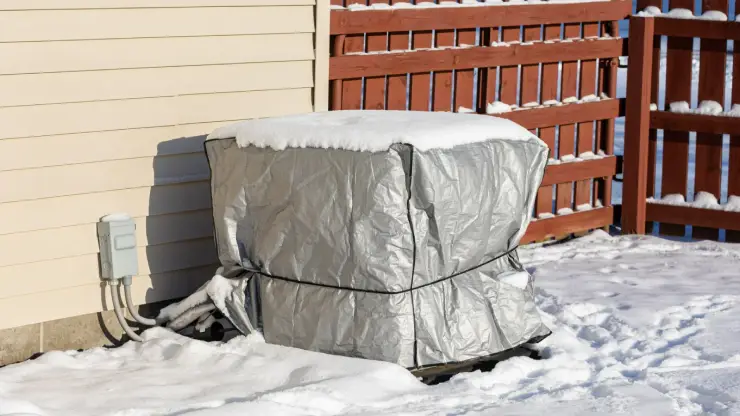
For most central air conditioning units in Ontario, fully covering your AC unit in winter is not recommended.
However — and this matters — some limited, breathable protection can be helpful in specific situations.
The mistake most homeowners make is treating winter protection as all-or-nothing. Ontario homes don’t work that way, and neither do HVAC systems.
What Outdoor AC Units Are Actually Designed to Handle
Modern AC condensers installed across Ontario are built for harsh environments. Snowfall, freezing temperatures, and wind exposure are not surprises to manufacturers.
These systems are engineered to withstand:
- Sub-zero temperatures
- Heavy snow accumulation
- Wind-driven ice particles
- Long periods of inactivity
Snow sitting on or around an AC unit is not automatically harmful. In many cases, it acts as insulation rather than a threat.
The real damage doesn’t come from cold alone — it comes from trapped moisture, poor airflow, and biological activity.
When Covering Your AC Unit Creates More Problems Than It Solves
This is where good intentions quietly turn into expensive repairs.
Moisture: Ontario’s Real Winter Enemy
Ontario winters are wet. Even in January, we experience freeze–thaw cycles that generate condensation.
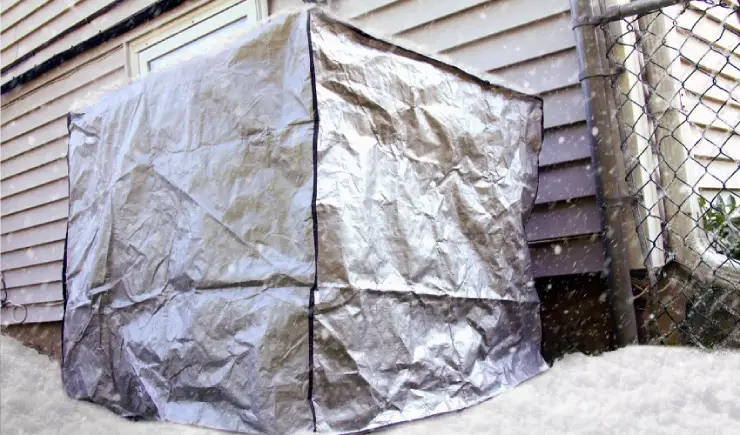
When a unit is fully wrapped or sealed, moisture becomes trapped inside. With nowhere to escape, that damp air settles into coils, fasteners, and electrical housings.
Over time, this can lead to:
- Coil corrosion
- Rusted fasteners
- Degraded electrical insulation
- Premature failure of contactors and capacitors
This type of damage often isn’t visible until spring, when homeowners schedule hvac maintenance ontario and discover the system has quietly deteriorated.
Rodents and Small Animals See Covered Units as Shelter
A covered condenser is warm, dry, and protected from wind — exactly what mice and squirrels look for during Ontario winters.
Once inside, they:
- Chew low-voltage wiring
- Nest near electrical components
- Leave debris that traps moisture further
This is one of the most common reasons homeowners end up searching emergency hvac repair near me during the first warm weekend of the year.
Ironically, the cover intended to protect the unit becomes the reason it fails.
Airflow Still Matters When the System Is Off
Even when your AC isn’t running, the unit is designed to breathe.
Sealing it disrupts natural ventilation, allowing condensation and stale air to linger. Over months, that stagnation accelerates internal wear.
Also Read: What To Do If Your Boiler Is Leaking From The Bottom?
Situations Where Limited Protection Is Actually Smart
Now for the nuance — because in Ontario, absolutes rarely survive reality.
There are scenarios where partial protection makes sense.
Roof Runoff and Falling Ice
If your outdoor unit sits directly beneath:
- Roof edges
- Eavestroughs
- Second-storey balconies
…then falling ice sheets can bend fins or damage fan guards.
In these cases, a top-only, breathable cover can help deflect impact while still allowing airflow. The key word is breathable. Plastic tarps and shrink wrap are not your friend here.
Heat Pumps: A Completely Different Rulebook
Heat pumps have become increasingly common across Ontario — and this is where many generic blogs fail homeowners.
If your system is a heat pump, do not cover it in winter.
Heat pumps operate year-round, even in freezing temperatures. Covering them can:
- Block airflow
- Prevent proper defrost cycles
- Trigger system lockouts
- Cause compressor strain
If you’ve had Heat Pump Installation Ontario or are considering one, winter exposure is part of the design — not a flaw.
Snow Is Harmless. Ice Is Not.
One of the most persistent myths is that snow damages AC units.
In reality:
- Light snow accumulation is fine
- Surrounding snow can even reduce wind exposure
- The danger comes from ice buildup inside the unit
The solution isn’t a cover. It’s clearance.
Keep snow from packing tightly around the base. Ensure meltwater can drain away. A shovel does more good than a tarp.
How HVAC Professionals in Ontario Actually Prepare AC Units for Winter
When we winterize systems across the GTA, the process is methodical — not cosmetic.
First, the system is shut down properly at the disconnect, not just the thermostat.
Then we:
- Remove leaves and debris
- Inspect wiring for vulnerability
- Check coil condition
- Confirm the unit remains level after seasonal ground movement
This often happens during scheduled hvac maintenance ontario, alongside furnace services planning.
Only after inspection do we decide whether any physical protection is necessary.
What We Consistently Advise Against (But Still See Every Year)
Despite best practices, certain mistakes repeat themselves:
- Fully sealed vinyl covers
- Plastic shrink wrap
- Tarps tied tightly around the base
- DIY foam insulation placed inside the unit
These methods trap moisture and invite rodents — two problems Ontario winters already provide in abundance.
Ontario’s Climate: The Factor Most Blogs Ignore
Ontario doesn’t stay frozen. It cycles.
Freeze → thaw → rain → freeze again.
This repeated moisture movement is why advice from milder climates doesn’t translate here. Any winter strategy must account for humidity, not just cold.
That’s also why local guidance from an ontario hvac contractor matters more than generic national content.
Cost Reality: Covering vs Repairing
Many homeowners cover their AC unit hoping to “extend its life.”
In practice, improper covering often leads to:
- Spring service calls
- Electrical repairs
- Coil cleaning
- Premature part replacement
Those costs far exceed the price of a professional seasonal inspection — especially when bundled with heating services readiness or boiler work such as Boiler Installation Ontario planning.

Commercial Systems Require a Different Approach
Commercial condensers face additional risks:
- Rooftop debris
- Drainage from adjacent systems
- Higher electrical exposure
That’s why commercial properties often coordinate HVAC prep alongside commercial electrical contractors ontario, particularly in multi-unit buildings.
Residential rules don’t always scale upward.
Energy Programs and Long-Term Efficiency
Homes participating in efficiency initiatives like Residential CoolSaver Ontario or businesses using Commercial CoolSaver benefit most from correct seasonal care.
Improper winter protection undermines efficiency gains made during summer operation.
Also Read: Why Is My Furnace Blowing Cold Air When Heat Is On?
Best Practices Summary for Ontario Homeowners
- ❌ Do not fully wrap your AC unit
- ✅ Use a breathable top cover only if falling ice is a concern
- ❌ Never cover heat pumps
- ✅ Keep snow cleared from the base
- ✅ Schedule seasonal inspections with a local provider
If electrical coordination is required, especially during upgrades, services involving residential electrical contractors ontario may also be part of a comprehensive approach.
FAQ
Should I cover my AC unit in winter in Ontario?
Generally no. Full covers often cause moisture and rodent issues. Partial protection may help in specific situations.
Can snow damage my air conditioner?
Snow alone is rarely harmful. Ice buildup and trapped moisture pose greater risks.
Are breathable covers safe?
Top-only breathable covers can be helpful if falling debris or ice is an issue.
Should heat pumps be covered?
No. Heat pumps must remain exposed to function properly year-round.
When should I book HVAC maintenance?
Late fall or early spring is ideal, often combined with heating system service.
Final Word from the Field
Covering your AC unit in winter feels responsible. In Ontario, that instinct can quietly backfire.
The best protection isn’t a cover — it’s informed care, proper clearance, and seasonal inspection by professionals who understand our climate.
If you want expert guidance rooted in Ontario winters — not generic advice — contact Ontario Air Services today and protect your HVAC investment the right way.