It used to be easier to predict hot and cold days in Toronto. You could plan for a few weeks of scorching summer, a real winter, and a few pleasant seasons in between. But now? The warm seasons are not what they used to be, the humid days seem long, and the temperature swings are changing by the minute.
I write this from the perspective of a team that works in basements, backyards, and utility rooms across the GTA every week. At Ontario Air Services, we don’t just talk about equipment – we see firsthand what really lasts in a July heat wave, what stays comfortable in those spring/fall flip-flops, and what homeowners regret buying when the first electric bill arrives.
This guide is meant to be like the conversation you wish you had before signing anything: plain English, a few honest trade-offs, and a clear recommendation depending on how your home is built and how you live in it.
What’s Toronto’s changing climate like?
Toronto’s “new normal” is more humidity, more swings, and higher expectations.
Toronto’s climate is still Toronto—Lake Ontario will always be part of the story—but hotter stretches and uncomfortable humidity are harder to ignore, and many homeowners are also thinking about efficiency and emissions at the same time. Heat Pump Installation Ontario, for example, are widely recognized as a reliable Canadian technology that can deliver year-round comfort, and municipal guidance highlights their efficiency and lower emissions potential in Ontario’s grid mix.
So when we say “best air conditioning system,” we’re not only talking about maximum cold air on a brutal day. We’re talking about:
- Humidity control (comfort isn’t just temperature)
- Quiet, steady operation (less blasting, fewer hot/cold spots)
- Smart staging (variable-speed and two-stage systems shine here)
- Resilience (systems that don’t crumble under real-world swings)
- Future-proofing (efficiency standards + refrigerant shifts are a real thing)
If you’re looking for air conditioning installation toronto, choosing the right system for Toronto’s climate can improve comfort while keeping energy costs under control.
Quick shortlist: the 5 systems that win most Toronto homes
If you only read one section, read this one. These are the systems we keep recommending because they match how Toronto homes are laid out—and how Toronto weather behaves.
1) Cold-climate air-source heat pump (ducted)
If your home already has ductwork and you want one “all-season” solution, a cold-climate ducted heat pump is hard to beat. In summer, it cools like an AC. In winter, it can provide a big chunk (sometimes most) of your heating, depending on the setup and the home.
Why it fits Toronto:
- Smooth performance in shoulder seasons when a furnace feels like overkill
- Excellent comfort when paired with a smart thermostat and proper commissioning
- Often a strong choice for homeowners trying to reduce natural-gas reliance
Best for:
- Most detached homes and many semis with decent ductwork
- Families that want consistent comfort room-to-room
Watch-outs:
- Needs proper sizing (oversizing kills humidity control)
- Older ductwork may need airflow fixes to shine
2) Ductless mini-split heat pump (zoned comfort)
A ductless mini-split is the “surgical” option: you cool (and often heat) the rooms you care about most, with room-by-room control. Toronto has plenty of older homes where ducts are limited, awkward, or just… not worth the battle.
Why it fits Toronto:
- Zoning is fantastic for mixed-use homes (home office upstairs, basement gym, etc.)
- High efficiency because you’re not pushing air through leaky ducts
- Great solution for additions, finished attics, and basement renovations
Best for:
- Older semis/townhomes with limited duct access
- Homes where the second floor always runs hotter
- Anyone who wants zoning without ripping walls open
Watch-outs:
- Aesthetics (wall heads aren’t everyone’s favorite)
- You still need a thoughtful placement plan, not “wherever it fits”
3) Variable-speed central air conditioner paired with a high-efficiency furnace
This is the “classic Toronto setup,” upgraded the right way. A variable-speed central AC paired with a modern furnace delivers strong cooling, better dehumidification, and quieter operation than entry-level systems.
Why it fits Toronto:
- Variable-speed systems run longer at lower output, which often feels more comfortable
- Better humidity management than a single-stage “on/off” unit
- Works well when you want familiar technology and predictable service paths
Best for:
- Homeowners replacing an older central AC
- Larger ducted homes that need whole-home cooling
Watch-outs:
- Performance depends heavily on ductwork and airflow balance
- Don’t skip maintenance—central systems reward consistency
4) Dual-fuel (hybrid) system: heat pump + gas furnace backup
Dual-fuel is a smart compromise for a lot of Toronto homeowners: you get heat pump efficiency when outdoor temperatures are moderate, and you keep a gas furnace for deep cold or peak demand.
Why it fits Toronto:
- Shoulder seasons = heat pump sweet spot
- Cold snaps = furnace confidence
- Comfort stays steady without forcing one system to do everything at the edge
Best for:
- Homes already on gas with a furnace nearing end-of-life
- People who want lower energy use without betting everything on one heat source
Watch-outs:
- Control strategy matters (switchover settings, thermostat logic)
- Needs a contractor who commissions the system properly, not “set and forget”
Working with an experienced ontario hvac contractor helps ensure your equipment is properly sized, correctly installed, and optimized for reliable performance across Ontario’s changing seasons.
5) Geothermal (ground-source) heat pump (high-end, niche)
Geothermal is the efficiency champion, but it’s not the default recommendation because install complexity and property constraints are real. When it fits, it’s incredible; when it doesn’t, it becomes a headache.
Best for:
- Homes with suitable lot space and long-term ownership plans
- Homeowners chasing top-tier efficiency and low operating costs
Watch-outs:
- Higher upfront cost and more involved installation planning
Also Read: Comparing Heat Pump Types: Economics and Differences for Toronto Homes
A side-by-side comparison that’s actually useful
Here’s a practical snapshot we use when helping homeowners choose—less marketing, more “what will I feel in my house?”
| System | Best for | Biggest comfort advantage | Typical trade-off |
|---|---|---|---|
| Ducted cold-climate heat pump | Whole-home, ducted houses | Steady temps + shoulder season comfort | Needs good ductwork + careful sizing |
| Ductless mini-split | Hot second floors, additions | True zoning + efficiency | Wall unit aesthetics + layout planning |
| Variable-speed central AC + furnace | Traditional HVAC replacement | Strong humidity control + quiet | Duct issues can limit gains |
| Dual-fuel hybrid | Gas homes wanting flexibility | Comfort + reliability across extremes | Commissioning and controls must be right |
| Geothermal | Long-term high-efficiency projects | Excellent efficiency + stable comfort | Upfront complexity/cost |
How to choose the right system without getting talked into the wrong one
Most “bad HVAC experiences” start with a rushed decision. Toronto homes are diverse—what works in a new-build in Vaughan may flop in a 70-year-old semi near Danforth.
Start with sizing: Manual J beats guesswork
Square footage is not sizing. Period. Proper sizing should consider insulation, windows, sun exposure, occupancy, and more—because oversizing can lead to short cycling and weak humidity control.
What you can ask for (in plain language):
- “Will you do a load calculation, or are we guessing?”
- “How will this system handle humidity on a sticky day?”
- “What’s your plan for balancing airflow upstairs?”
If a quote looks too fast to be real, it usually is.
Ductwork and airflow: the silent deal-breaker
You can buy the best equipment on paper and still feel uncomfortable if:
- ducts leak,
- returns are undersized,
- airflow is unbalanced,
- static pressure is too high.
A good install includes airflow checks, not just “it turns on.”
Electrical capacity is part of the decision now
Heat pumps and high-efficiency systems can require electrical upgrades, especially in older Toronto homes. This is where having a team that can coordinate properly matters—sometimes you’ll need residential electrical contractors ontario, and for larger sites or rooftop/commercial work.
Refrigerants and “future-proofing” (without the fear-mongering)
Refrigerant policy and supply controls are tightening in North America, and Canada has specific rules around HFC imports/authorization and compliance that affect the market. You don’t need to panic-buy—but you should ask what refrigerant your new equipment uses and what that means for long-term serviceability.
A simple question to ask any installer:
- “Is this system using a newer low-GWP refrigerant platform, and what does that mean for service down the road?”
Toronto home types and the best match for each
You’ll get better results matching the system to the building—rather than forcing a trendy system onto the wrong layout.
Older Toronto semis and row houses
Common reality: upstairs runs hot, ducts are limited, and retrofits can be finicky.
Often the best fit:
- Ductless mini-splits for zoning the top floor
- A ducted heat pump if ductwork is solid (or can be upgraded without drama)
Condos and stacked townhomes
Space constraints and condo rules change the game.
Often the best fit:
- Condo-approved fan coil solutions (building-dependent)
- Ductless or compact ducted heat pump solutions where permitted
Newer builds in the GTA
These homes can be tight (good) but sometimes have airflow shortcuts (not great).
Often the best fit:
- Variable-speed systems (AC or heat pump) with proper commissioning
- Zoning if the layout demands it
Basements, additions, and “one room that never behaves”
This is where ductless shines. If one space needs its own comfort plan, don’t punish the whole house.
Also Read: Do Heat Pumps Work in Ontario’s Cold Weather?
Efficiency that matters in Canada: what to look at
Efficiency isn’t a trophy; it’s a monthly bill and a comfort profile.
NRCan notes that heat pumps are proven in Canada for year-round comfort, and municipal guidance highlights their efficiency potential (including the fact that, in some cases, heat pumps can deliver multiple units of heat per unit of electricity).
SEER2 and HSPF2 in human terms
- SEER2: cooling efficiency (higher generally means lower cooling costs)
- HSPF2: heating efficiency for heat pumps (higher generally means more efficient heating)
Ask for the ratings on the exact model being quoted—don’t accept vague “high efficiency” talk. NRCan also maintains regulatory context for central AC and heat pumps in Canada.
Variable-speed vs two-stage vs single-stage
If Toronto humidity bothers you, variable-speed is often worth serious consideration because longer, gentler run times can pull more moisture out of the air.
Rule of thumb we share with homeowners:
- If you hate temperature swings and clammy air, avoid entry-level “bang-bang” systems when budget allows.
Comfort upgrades that make any system feel better
Even the best equipment won’t fix comfort issues if your home fights it. These add-ons are often the difference between “it cools” and “it feels great.”
Smart thermostats and proper controls
Humidity control and ventilation
Toronto summers can feel heavy. Sometimes comfort improves more by addressing humidity and air exchange than by chasing lower and lower thermostat setpoints.
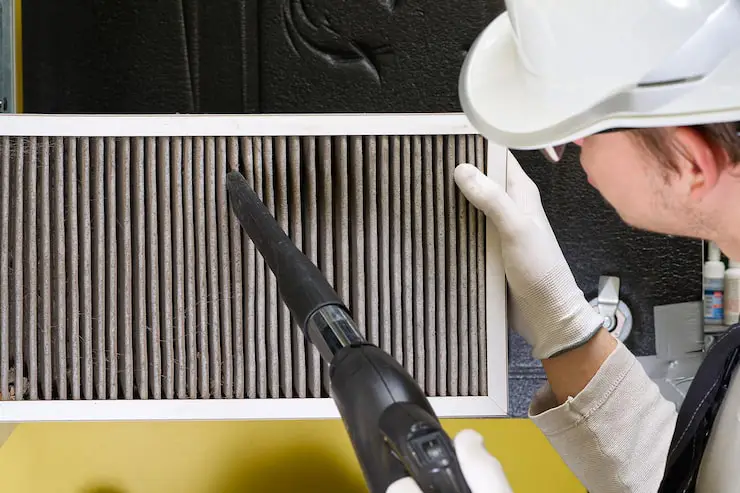
Air quality: don’t ignore filters and airflow
Better filtration can help, but it must be paired with airflow that can support it (overly restrictive filters can strain a system).
Installation and maintenance: where most systems win or lose
We’ve seen brand-new systems disappoint because the install was rushed. We’ve also seen “average” systems feel amazing because the install was careful.
A proper install should include:
- correct sizing and equipment match
- refrigerant charge verification
- airflow testing and balancing
- condensate drainage done right
- homeowner walk-through (how to run it efficiently)
If you want ongoing reliability, plan for routine service—this is where hvac maintenance ontario pays for itself by preventing the surprise breakdown call.
If you do end up with a surprise breakdown, the phrase people search at 2 a.m. is basically emergency hvac repair near me—and we get it. That’s why Ontario Air Services runs 24/7 emergency support across Ontario.
A buyer’s checklist you can screenshot before calling anyone
Here’s the no-fluff list:
- Ask for a load calculation (Manual J or equivalent)
- Confirm whether humidity control is part of the plan
- Confirm staging (single vs two-stage vs variable-speed)
- Ask what ductwork improvements (if any) are included
- Ask about electrical requirements and panel capacity
- Ask what refrigerant platform the system uses
- Ask what commissioning steps are included (airflow + charge verification)
- Get maintenance expectations in writing
- Compare warranties—but also compare installer reputation
Where Ontario Air Services fits in
Ontario Air Services is built for the practical homeowner: you want comfort, you want straight answers, and you don’t want to redo this in five years.
We provide:
- whole-home and zoned cooling solutions
- heat pumps, furnaces, and hybrid systems
- emergency support when systems fail unexpectedly
- maintenance planning to keep equipment running the way it should
If incentives apply to your project, we’ll also point you toward the most relevant paths, including programs we reference on our site like Residential CoolSaver Ontario.
FAQ
Is a heat pump actually good enough for Toronto summers?
Yes—modern heat pumps cool very effectively, and many homeowners choose them specifically for efficient summer comfort.
Central AC or ductless mini-split: which feels less “sticky”?
Either can, but humidity control depends on sizing and run time. Variable-speed and properly sized systems usually feel drier and steadier.
What’s the biggest mistake people make when buying an AC in the GTA?
Buying by brand or tonnage without a load calculation. Oversizing is a comfort killer.
How often should I service my system in Ontario?
Typically twice a year—once before cooling season and once before heating season—especially with Toronto’s seasonal swings.
Do I need an electrical upgrade for a heat pump?
Sometimes, especially in older homes. A quick site assessment will confirm panel capacity and any required electrical work.
If you want a system that’s sized properly, tuned properly, and matched to how your Toronto home actually behaves, contact Ontario Air Services for a quote and options review. Call +1 (647) 687-4911 or request a quote through our site.