Table of Contents
If you’ve ever walked past your furnace and thought, “It’s running… but why does the house still feel a bit off?”—you’re not alone. In Ontario, where heating season feels like it takes up half the year, a furnace isn’t just an appliance. It’s comfort, sleep, routine, and (let’s be honest) peace of mind.
Now here’s the sneaky part: one of the biggest performance killers is also one of the smallest, cheapest components in the whole system—the air filter.
A neglected filter doesn’t just make your furnace “work a little harder.” It can trigger a chain reaction: airflow drops, components heat up, the furnace cycles strangely, and the air you breathe starts carrying more dust and irritants. This article breaks down what’s happening behind the scenes, what to watch for, and how to protect both your HVAC investment and your lungs—without overcomplicating it.
How a Dirty Air Filter Affects Your Furnace Performance
A furnace is basically an airflow machine that happens to make heat. When that airflow gets choked, everything downstream suffers—comfort, efficiency, and the lifespan of the equipment. Here’s how it plays out in real homes across Ontario.
Reduced Airflow and System Strain
Your furnace is designed for a specific amount of air to move through it. When the filter is packed with dust, pet hair, and lint, the system has to “pull” harder to move air.
What that looks like day-to-day:
- Some rooms feel colder than others
- Vents feel weak, even when the furnace is clearly on
- The house takes longer to warm up, especially on windy Ontario nights
Behind the scenes, restricted airflow can increase strain on the blower motor and make the furnace operate outside its sweet spot. It’s the HVAC version of breathing through a scarf—fine for a minute, annoying for an hour, and a problem for weeks.
Overheating and Short Cycling
Short cycling is when your furnace turns on, runs briefly, shuts off, then repeats. A dirty filter is a common trigger because low airflow can cause heat to build up too quickly inside the system.
You might notice:
- The furnace seems “busy” but comfort doesn’t improve
- More frequent on/off cycling (especially noticeable at night)
- Temperature swings that feel a bit chaotic
Short cycling is more than an annoyance—it adds wear and tear because the most stressful moment for many components is startup.
Risk of Heat Exchanger Cracks
This one matters, because it touches safety—not just comfort.
When airflow is restricted, internal temperatures can climb higher than intended. Over time, that repeated overheating can contribute to metal fatigue in critical components like the heat exchanger. You don’t need to panic at the first dusty filter—but you do want to take the pattern seriously.
If you ever notice persistent odd smells, frequent shutdowns, or performance that keeps getting worse, it’s wise to get a professional inspection instead of guessing.
Increased Energy Bills
Ontario utility bills don’t need extra help rising.
A clogged filter can increase run time because the furnace struggles to move enough heated air into your living space. That means:
- longer cycles,
- more fuel or electricity used,
- and less comfort for the money.
Homeowners often blame the thermostat first (fair), but the filter is usually the simpler culprit.
Premature System Failure & Costly Repairs
Here’s the boring truth that saves money: most major furnace repairs aren’t caused by “bad luck.” They’re caused by small issues that stayed small for too long.
A dirty filter can contribute to:
- blower motor stress,
- repeated overheating events,
- more frequent safety shutoffs,
- and avoidable breakdowns when you need heat most.
If you’re ever in a no-heat situation during a cold snap, this is exactly when people start searching emergency hvac repair near me—and it’s often preventable.
The Hidden Danger: How Dirty Filters Worsen Indoor Air Quality
Performance is only half the story. The other half is what you and your family are breathing.
A filter’s job isn’t to “make the air perfect.” It’s to catch particles before they recirculate through your home. When it’s overloaded, it becomes less of a barrier and more of a dusty bottleneck.
Circulation of Dust, Dander, and Allergens
When a filter is past its prime, more airborne particles can make it back into your living areas. That often shows up as:
- dust settling faster on furniture
- itchy eyes or scratchy throat that “mysteriously” lingers indoors
- allergy symptoms that feel worse at home than outside
This is especially noticeable in winter, when windows stay shut and indoor air keeps recirculating.
Mold and Bacteria Growth Behind Filters
A dirty filter can also become a “catch-and-hold” zone for moisture—especially if humidity is high, there’s condensation, or the HVAC system has damp areas nearby.
While not every dirty filter grows mold, the risk goes up when:
- filters sit too long,
- basements are damp,
- or airflow problems cause temperature imbalances.
If you ever see discoloration or smell a musty odor near the return air, that’s a good reason to stop guessing and get it checked.
Triggering Asthma, Allergies, and Respiratory Issues
For many households, indoor air quality isn’t a nice-to-have. It’s the difference between sleeping well and waking up congested.
Poor filtration can aggravate:
- asthma symptoms,
- seasonal allergies,
- general respiratory irritation (especially during winter dryness).
Sometimes people chalk it up to “just winter.” Sometimes it is. But a loaded filter can make it noticeably worse.
Vulnerable Groups at Higher Risk
Some people feel IAQ issues faster than others:
- kids (smaller airways, lots of time at home)
- seniors
- anyone with asthma, COPD, or allergies
- people recovering from illness
- households with pets (dander load adds up quickly)
If any of these apply to your home, filter habits matter more than you think.
“Sick Building Syndrome” and Chronic Exposure
“Sick building syndrome” sounds dramatic, but the idea is simple: when indoor air is consistently poor, people can develop ongoing symptoms—headaches, fatigue, irritated eyes/throat—without a single obvious cause.
A dirty filter isn’t the only trigger, but it’s one of the easiest fixes in the whole indoor-air puzzle. It’s the low-effort lever that supports everything else.
Also Read: Why Is My Furnace Blowing Cold Air When Heat Is On?
Warning Signs Your Air Filter Needs Replacing
You don’t need to “remember the date” perfectly. Your house usually tells you. Here are the signs homeowners in Ontario notice most often.
Visible Dust Buildup on the Filter
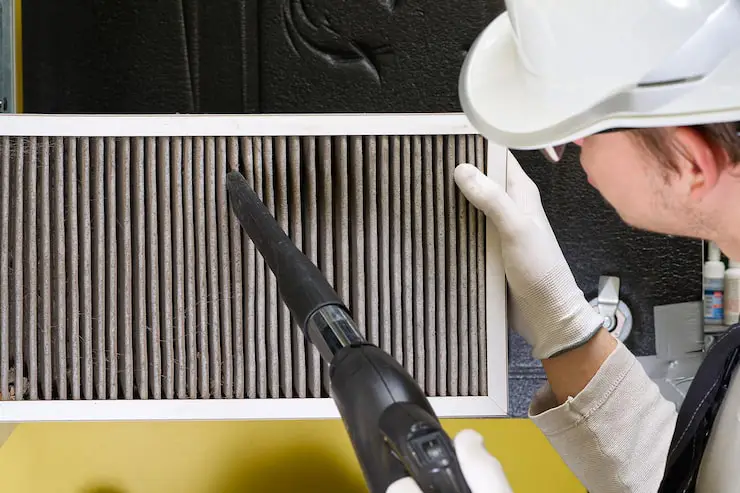
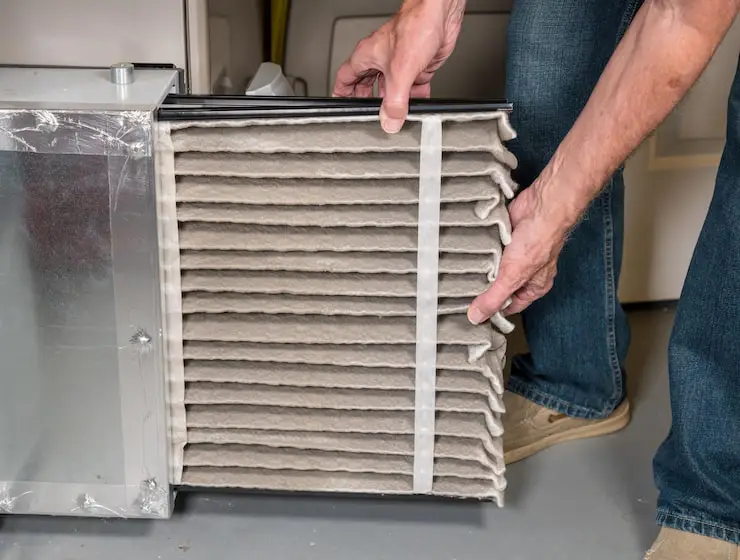
This is the classic. If you pull the filter and it looks grey, furry, or clogged—your system has been working harder than it should.
A quick real-world guideline:
- If you can’t see much of the filter material anymore, it’s not doing its job properly.
Weak Airflow from Vents
If airflow feels noticeably weaker than usual, and you haven’t changed thermostat settings, the filter should be one of the first checks.
Weak airflow can also be duct-related, but the filter is the fastest thing to rule out.
Unusual Noises or Burning Smells
A struggling system can make new sounds:
- whistling (air forcing through restrictions)
- louder fan noise
- rattling that wasn’t there before
And if you ever smell burning, shut the system down and call a pro. Some smells are harmless “dust burn-off” at the start of the season, but recurring burning smells aren’t something to ignore.
Rising Energy Bills Without Cause
If your bill climbs and your habits didn’t change, it’s worth checking:
- filter condition,
- vent obstructions,
- and whether the system is cycling more often.
A filter change won’t solve every billing mystery—but when it’s the cause, it’s a very satisfying fix.
Frequent System Shutdowns or Error Codes
Modern furnaces protect themselves. If a component is overheating or airflow is too low, the system may shut down or throw error codes.
If you’re seeing repeated shutdowns, don’t just keep resetting it. Fix the root cause—or you’ll end up needing Emergency Furnace Repair at the worst possible time.
How to Protect Your System and Your Health
This is where most blog posts get preachy. Let’s keep it practical.
You don’t need to become an HVAC expert. You just need a simple routine and the right filter strategy for your home.
Choose the Right MERV Rating for Your Needs
MERV ratings can feel confusing because “higher” sounds automatically better. But in real homes, airflow matters too.
A balanced approach:
- If allergies are mild and you want good airflow, a mid-range filter is often ideal.
- If allergies are intense, pets are heavy-shedding, or dust load is high, you may benefit from stronger filtration—as long as your system can handle it.
If you’re unsure, ask a qualified ontario hvac contractor to recommend a filter that improves filtration without suffocating the system.
Set a Filter Replacement Schedule (and Stick to It!)
The best schedule is the one you’ll actually follow.
Most homeowners do well with a simple rhythm:
- check monthly (takes 30 seconds),
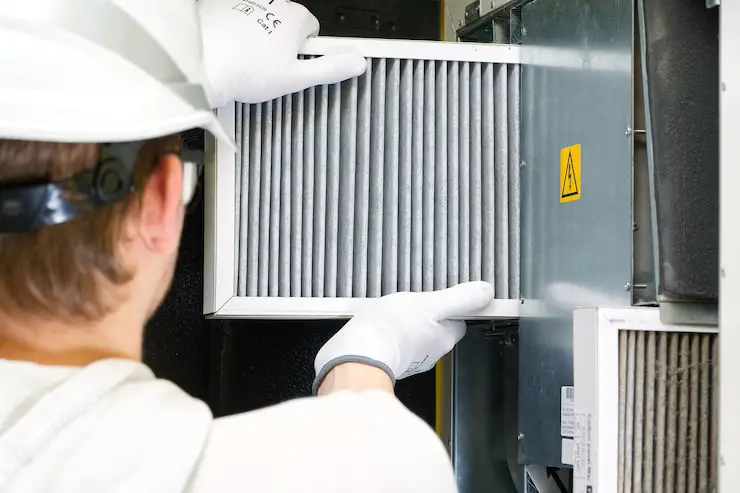
- replace when it looks loaded—or on a set cadence if you prefer routines.
If you have pets, renovations, or a dusty environment, you’ll likely need to replace more often.
Pro tip that feels almost too simple: put a recurring reminder in your phone. You’ll forget once, then you won’t.
Consider Washable or High-Efficiency Filters
Washable filters can work for some households, but they’re not “set and forget.” If they’re not cleaned thoroughly and dried properly, they can become their own air-quality issue.
High-efficiency disposable filters can be a great option, especially for:
- allergy-heavy households,
- homes near construction,
- or families who just want cleaner indoor air.
The goal is clean air and healthy airflow—not one at the expense of the other.
Combine Filter Changes with Annual HVAC Maintenance
Filter changes are the habit. Maintenance is the insurance.
A proper tune-up helps catch:
- airflow restrictions beyond the filter,
- blower performance issues,
- safety and combustion concerns,
- and early signs of parts wearing out.
If you want to keep things simple and consistent, pairing filter changes with hvac maintenance ontario is one of the smartest, lowest-stress strategies.
And if your system is aging, proactive care matters even more—because the margin for “minor issues” gets smaller over time.
Also Read: Reasons Why Your Heater is Blowing Cold Air
Invest in Air Purifiers or UV Lights for Extra Protection
If someone in your home is sensitive to air quality, a filter alone might not be enough.
Depending on your needs, add-ons like:
- whole-home air purification,
- UV lights (in the right application),
- better ventilation strategies,
can make a noticeable difference.
This is especially helpful in Ontario’s winter months, when ventilation naturally drops because the house stays sealed.
FAQs
Can a dirty air filter cause my furnace to stop working?
Yes. A severely clogged filter can reduce airflow enough to trigger overheating and safety shutoffs. If the furnace keeps shutting down, replace the filter and book service—don’t keep resetting it.
Will changing my filter improve indoor air quality immediately?
Often, yes—especially if your old filter was loaded. You may notice less dust movement and fewer irritants, but full improvement can take a bit as particles already in the home settle and clear.
How do I know what size or type of filter to buy?
Your current filter’s frame usually lists the size (e.g., 16×25×1). Match the dimensions exactly. If you’re unsure about type/MERV, ask hvac repair ontario pros to recommend the safest option for your system.
Can I clean and reuse disposable filters?
No—most disposable filters aren’t designed to be cleaned. Vacuuming can damage the filter media and reduce effectiveness. If you want reusable, choose a true washable filter designed for that purpose.
Final CTA
If your furnace is running longer, your air feels dustier, or you’ve had even one “weird shutdown,” don’t wait for it to become a no-heat emergency.
Ontario Air Services can help you choose the right filtration setup, protect your Furnace Maintenance Ontario, and keep your indoor air noticeably cleaner—without guesswork.