When Ontario’s harsh winter temperatures plummet below freezing, the last thing any homeowner wants is a furnace that refuses to cooperate. You’ve set your thermostat, heard the system kick on, and waited expectantly for that comforting wave of warmth—only to feel cold air rushing through your vents instead. This frustrating scenario is more common than you might think, and while it can signal anything from a simple setting mistake to a more complex mechanical failure, the good news is that many causes are fixable, sometimes without professional intervention.
This comprehensive guide will walk you through every potential reason your heating system might be delivering cold air when it should be warming your home. From quick thermostat adjustments to identifying when it’s time for emergency furnace repair, we’ll cover the diagnostic process step-by-step, helping you restore comfort to your space while potentially saving hundreds on unnecessary service calls.
Common Culprits Behind Cold Air From Your Heating System
The heating cycle in any furnace involves multiple components working in perfect harmony: the thermostat signals a temperature drop, the gas valve opens, ignition occurs, the heat exchanger warms up, and finally the blower motor distributes heated air throughout your ductwork. When any link in this chain breaks, cold air becomes the unwelcome result.
Systems that perform flawlessly in milder regions may struggle here, making regular furnace maintenance Ontario absolutely critical. Let’s examine the most frequent causes in order of likelihood and ease of resolution.

Thermostat Configuration Problems
The thermostat serves as your heating system’s command center, and incorrect settings represent the single most common reason for cold air complaints. Many Ontario homeowners transitioning from summer cooling to winter heating forget to adjust their thermostat properly, leading to confusion when the system behaves unexpectedly.
Fan Setting: AUTO vs ON
Most modern thermostats feature two fan operation modes that behave very differently. When set to “ON,” your blower motor runs continuously, circulating air through your home regardless of whether the furnace is actively heating. This means between heating cycles, you’ll feel room-temperature or cool air flowing from vents—perfectly normal air that simply hasn’t been heated yet.
The “AUTO” setting solves this issue by running the blower only when the furnace is actively generating heat. Switch your thermostat to AUTO mode and wait 10-15 minutes. If warm air begins flowing, you’ve identified and resolved the problem without any repair needed.
Temperature Set Point Issues
Another frequent oversight involves the temperature setting itself. Your thermostat won’t activate the heating cycle unless the set temperature exceeds the current room temperature by a sufficient margin (typically 2-3 degrees). If your home reads 20°C and your thermostat is set to 21°C, the system might not engage, or it might cycle on and off rapidly without producing noticeable heat.
If your thermostat is battery-operated, weak batteries can cause erratic behavior. Replace them annually before heating season begins. For hardwired units experiencing issues, check your electrical panel for tripped breakers that might interrupt power to the thermostat.
Air Filter Restrictions and Overheating
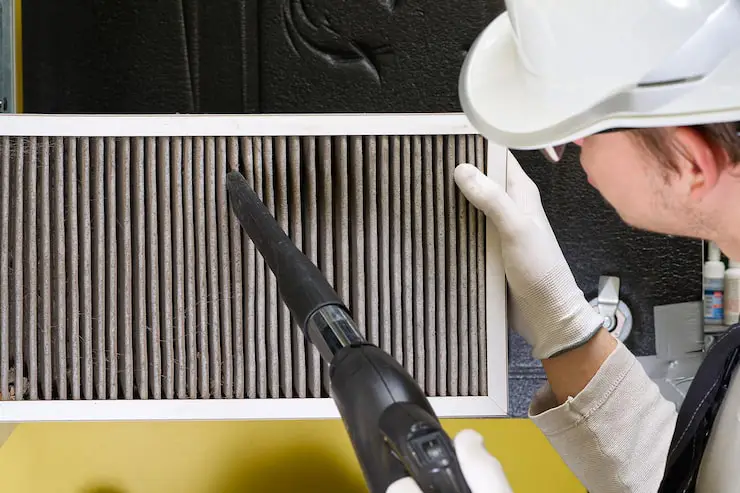
A clogged air filter ranks as the second most common cause of furnaces blowing cold air, yet it’s entirely preventable through simple maintenance.
When airflow becomes severely restricted by a dirty filter, the heat exchanger—where combustion gases transfer warmth to circulating air—cannot dissipate heat properly. This causes internal temperatures to spike dangerously high, triggering the limit switch, a critical safety device that immediately shuts off the burners to prevent heat exchanger damage or even fire.
However, the blower motor typically continues running to cool down the overheated components, pushing unheated air through your ductwork. This protective measure prevents catastrophic damage but leaves you in the cold temporarily.
Inspection and Replacement Process
Locate your filter—usually found in a slot near the blower compartment, in a return air vent, or behind a grill on your furnace itself. Turn off your system before removing the filter to prevent unfiltered air from entering the blower chamber.
Hold the filter up to a light source. If light cannot penetrate, or if you can see visible dust buildup, replacement is overdue. For Ontario homeowners, filter replacement frequency depends on several factors: homes with pets or carpeting need monthly changes, while others might extend to 60-90 days. During peak heating season (November through March), err on the side of more frequent replacement.
Also Read: Reasons Why Your Heater is Blowing Cold Air
Pilot Light and Ignition System Failures
For Ontario homeowners with older furnaces, pilot light issues remain a prevalent cause of cold air problems. The pilot light is a small, continuously burning flame that ignites the main burners when heat is needed.
Extinguished Pilot Lights
If your pilot light has gone out, the burners cannot ignite, meaning no heat generation occurs even though the blower may run. Common causes for pilot light extinction include drafts near the furnace or dirt obstructing the pilot orifice.
Relighting a pilot light is straightforward but requires caution. Locate the pilot light assembly, turn the gas control knob to “OFF,” and wait five minutes. Switch to “PILOT,” press and hold the reset button while using a long lighter to ignite the pilot. Once lit, continue holding for 30-60 seconds, then release and switch to “ON.”
A pilot flame should burn steady blue with a defined cone shape. If your pilot light won’t stay lit after several attempts, it likely needs professional replacement.
Electronic Ignition Issues
Modern high-efficiency furnaces use either hot surface ignitors (HSIs) or intermittent pilots. HSIs are elements that glow red-hot when activated, igniting gas burners directly.
Flame sensors verify that burners have ignited successfully. When the flame sensor fails to detect a flame, the control board shuts off gas flow as a safety precaution, resulting in cold air while the blower continues running.
Diagnosing ignition system problems usually requires professional equipment to measure flame sensor current (measured in microamps) and ignitor resistance. While DIY homeowners can sometimes clean flame sensors with fine sandpaper or emery cloth, replacement typically necessitates calling your Ontario HVAC contractor to ensure proper installation and system safety verification.
Gas Supply and Fuel Delivery Problems
Adequate gas supply is essential for any gas furnace to produce heat. When fuel delivery is interrupted, your furnace will blow cold air as the blower runs but burners fail to ignite.
Several scenarios can disrupt gas supply. The gas valve feeding your appliance might be closed—check that the handle is parallel to the gas line (open position).
For propane users, tank levels must be monitored, as tanks can run empty, halting heating until refill.
Condensate Drainage Blockages
High-efficiency furnaces produce significant condensation as a byproduct of the heating process. A condensate drain line routes this water to a floor drain or outside. When this line becomes clogged, water backs up, and safety switches shut down the heating process.
The blower may continue running briefly, circulating cool air, and you might notice water pooling around your furnace base.
Clearing Condensate Lines
First, locate the condensate drain line exit point. For floor drains, ensure the drain isn’t clogged. Flushing the drain line can dissolve minor blockages.
For stubborn clogs, a wet/dry vacuum applied to the drain line outlet can sometimes dislodge blockages. However, if backups recur, professional cleaning may be necessary.
Ductwork Leaks and Distribution Issues
Even when your furnace generates heat perfectly, ductwork problems can make it seem like cold air is flowing from vents. Leaky ducts allow heated air to escape before reaching living areas, while drawing in cold air.
Identifying Duct Problems
During a heating cycle, inspect accessible ductwork. Feel along joints for air leakage—you shouldn’t detect airflow from anywhere except vent registers. Look for visible gaps or damaged insulation.
Closed or blocked supply vents also create problems. When too many vents are blocked, air pressure increases, forcing more air to leak and reducing efficiency.
Return air pathways are equally important. Blocked return vents restrict airflow into the furnace, potentially causing overheating.
Significant duct leaks require professional sealing to improve system efficiency.
For homes with extensive duct leakage (common in older Ontario properties), HVAC repair Ontario specialists can perform pressure testing to quantify leakage and identify problem areas using smoke or infrared imaging. Sealing ductwork typically improves system efficiency by 15-30%, reducing heating costs while improving comfort.
Limit Switch and Safety Control Malfunctions
The limit switch measures temperature inside the plenum and controls when the blower motor starts and stops relative to burner operation.
When functioning correctly, the limit switch delays blower startup until the heat exchanger reaches adequate temperature, preventing cold air from circulating. It also shuts off burners if temperatures exceed safe limits.
A malfunctioning limit switch might allow the blower to run continuously, resulting in cold air between heating cycles. Alternatively, it might shut down burners prematurely.
Replacement requires professional service, as proper calibration is essential for both comfort and safety.
Blower Motor and Fan Problems
The blower motor is responsible for circulating air through your ductwork. When this component malfunctions, you might experience no airflow or weak airflow that feels cold because heated air isn’t being distributed effectively.
Common blower issues include failed capacitors or worn bearings. Some problems manifest intermittently—the blower might work fine during short cycles but overheat during extended operation.
Variable-speed blower motors in modern furnaces can develop errors.
Blower motor replacement is a significant repair, typically costing $400-$800 depending on motor type and system configuration. However, when paired with other aging components, this expense might indicate it’s time to consider furnace installation Ontario options for a complete system replacement, especially if your current furnace exceeds 15-20 years of age.
First-Time Startup Considerations
As winter approaches, many Ontario homeowners experience cold air from vents during their first furnace startup of the season. This often stems from simple oversights rather than major malfunctions.
Before calling for service, verify your thermostat settings. Ensure it’s set to “HEAT” mode and the temperature setpoint is above current room temperature. For fan settings, select “AUTO” instead of “ON” to prevent continuous circulation of unheated air.
Check that all supply vents are open and unobstructed. During summer, vents might have been closed for air conditioning efficiency—reopen them to allow proper airflow.
Finally, inspect your air filter. If unchanged since last season, it could be clogged, triggering safety switches that prevent heating.
Also Read: Why Is My AC Not Cooling? Quick Fixes & When to Call the Pros
Heat Exchanger Cracks and Carbon Monoxide Concerns
A cracked heat exchanger is a serious issue that can cause your furnace to blow cold air while posing significant health risks. The heat exchanger transfers heat from burners to air while containing combustion gases.
Cracks allow combustion byproducts, including carbon monoxide (CO), to mix with household air. As a safety measure, modern furnaces detect this and shut down burners, resulting in cold air from vents.
Symptoms include unusual odors, soot around vents, or frequent burner shutdowns. CO is odorless and deadly—install CO detectors on every level of your home.
Professional inspection is mandatory for suspected cracks. Technicians use specialized cameras or combustion analyzers to confirm issues. Replacement costs vary but prevention through annual maintenance is key.
When to Call Professional HVAC Services
While many cold air issues can be resolved with basic troubleshooting, certain situations require professional intervention to ensure safety and proper repair.
Contact a licensed HVAC technician if:
- Pilot light or ignition problems persist after basic attempts
- You suspect gas leaks or smell natural gas
- Water is pooling around your high-efficiency furnace
- Unusual noises or burning smells accompany cold air
- The furnace is over 15 years old and showing multiple issues
- DIY fixes haven’t resolved the problem within 24 hours
For urgent situations during Ontario’s coldest months, emergency HVAC repair near me services provide 24/7 response, ensuring your home doesn’t remain without heat during dangerous cold snaps.
Professional service typically includes diagnostic fees of $100-200, with repairs varying based on the issue. In Ontario, choose certified technicians familiar with local building codes.
Preventive Maintenance for Reliable Winter Heating
The best strategy for avoiding mid-winter cold air emergencies is comprehensive preventive maintenance performed before heating season begins. Professional furnace maintenance Ontario services typically include:
- Cleaning burners and heat exchanger
- Testing safety controls and ignition systems
- Inspecting ductwork for leaks
- Lubricating moving parts
- Verifying gas pressure and connections
Homeowners can perform monthly tasks like changing air filters and clearing vents of dust. Keep the area around your furnace clean and free of flammable materials.
System Upgrades and Replacement Considerations
If your furnace frequently blows cold air despite maintenance, it may be time for upgrades or replacement. Older units (15+ years) lose efficiency, leading to higher bills and unreliable performance.
Consider high-efficiency models with AFUE ratings above 90% for better heat output and lower energy costs. Variable-speed blowers provide more consistent temperatures and quieter operation.
When replacing, factor in home size, insulation, and fuel type. Professional sizing ensures optimal performance—oversized units cycle frequently, causing temperature swings and cold air issues.
Many Ontario residents also explore heat pump installation Ontario options, particularly air-source heat pumps that can provide both heating and cooling. While heat pumps traditionally struggled in extreme cold, modern cold-climate models operate efficiently down to -25°C or lower, making them viable for most of Ontario except the far north.
Regional Considerations for Ontario Homeowners
Ontario’s harsh winters amplify furnace problems, with extreme cold stressing systems and increasing breakdown risks.Local factors include:
- High humidity leading to more condensate issues in efficient furnaces
- Potential for frozen drain lines during deep freezes
- Availability of natural gas vs. propane in rural areas
- Provincial rebates for energy-efficient upgrades through programs like Home Efficiency Rebate Plus
Choose HVAC providers experienced with Ontario’s climate and certified by TSSA for gas work.
Emergency Heating Alternatives During Repairs
While awaiting professional service, maintain warmth using safe alternatives:
- Space heaters: Use electric models with tip-over protection, keeping them away from flammables
- Portable propane heaters: For well-ventilated areas only, with CO detectors
- Wood-burning fireplaces: If available and properly maintained
- Layer clothing and use blankets to conserve body heat
- Seal drafts around windows and doors with weatherstripping
Avoid using ovens or stoves for heating, as they pose fire and CO risks. If temperatures drop below freezing, prevent pipe bursts by letting faucets drip.
Frequently Asked Questions
Why does my furnace blow cold air for a few minutes when it first starts?
This is completely normal during startup. Cold air in your ductwork from the previous heating cycle must be displaced before heated air reaches vents. Most systems take 3-5 minutes to begin circulating warm air, slightly longer for first-time seasonal startup. If cold air persists beyond 10-15 minutes, investigate potential issues outlined in this guide.
How often should I replace my furnace filter in Ontario?
During peak heating season (November-March), monthly replacement is ideal for most homes. Households with pets, carpeting, or allergy concerns should check filters every 2-3 weeks. Spring and fall might allow 60-90 day intervals. Always inspect monthly regardless—if the filter looks dirty, replace it regardless of elapsed time.
Is it safe to reset my furnace repeatedly when it shuts down?
No. While most furnaces have reset buttons, repeated shutdowns indicate an underlying problem requiring diagnosis. Safety controls shut down furnaces to prevent damage or dangerous conditions. Continually resetting overrides these protections and could lead to equipment damage, fire risk, or carbon monoxide exposure. After one or two reset attempts, call professional service.
Can I operate my furnace with a cracked heat exchanger?
Absolutely not. Cracked heat exchangers allow combustion gases including carbon monoxide to enter your home’s air. This poses immediate health and life safety risks. If a technician identifies heat exchanger damage, cease furnace operation until proper repairs or replacement occur. Use alternative heating only as outlined in safety guidelines.
Restore Warmth and Comfort with Expert Help
Whether you need emergency service during a frigid cold snap, scheduled furnace maintenance Ontario before winter arrives, or expert advice on system replacement options, our team is ready to help. We understand Ontario’s unique climate challenges and stock commonly needed parts to minimize downtime.
Don’t spend another cold night waiting for warmth. Contact Ontario Air Services today for professional furnace diagnosis and repair. Our 24/7 emergency service ensures help is always available when your heating system fails.